
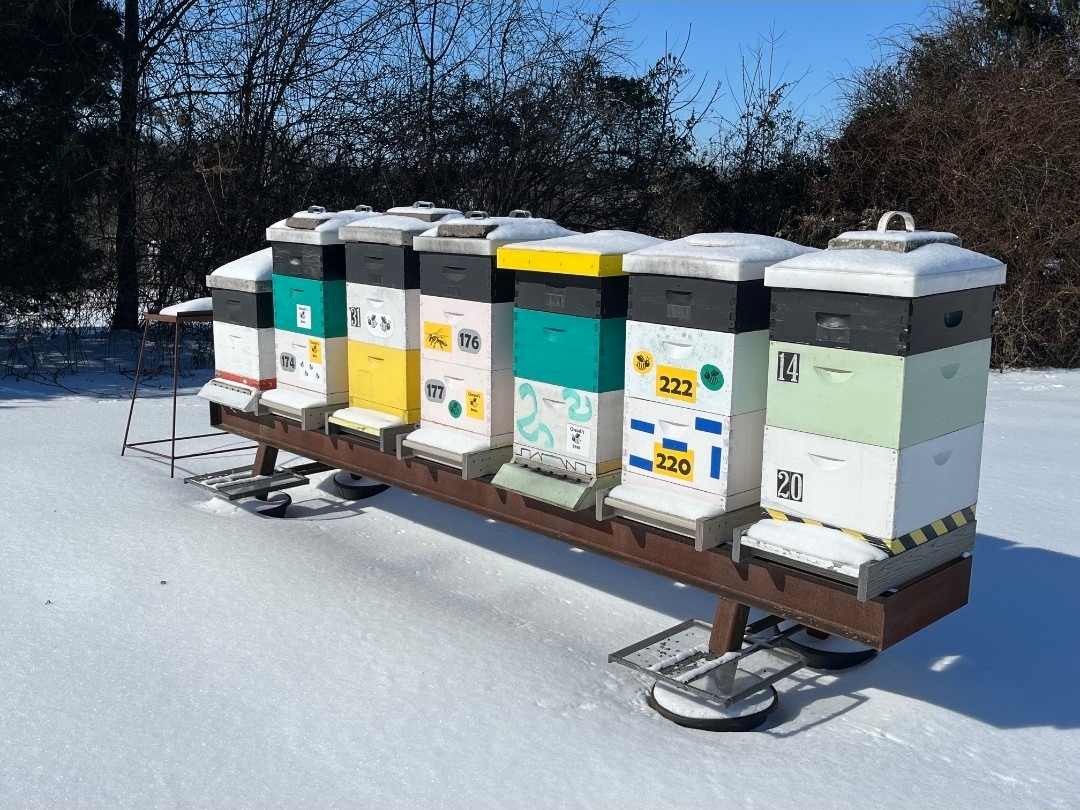
Condensation Can Threaten a Hive
When Kentucky beekeepers think about winter losses, cold temperatures often get the blame. In reality, moisture is frequently the bigger threat, especially during late winter when fluctuating temperatures create the perfect conditions for condensation inside the hive.
Honey bees are remarkably resilient in the cold. A healthy cluster can survive freezing temperatures as long as it stays dry and well fed. Moisture, however, steals heat, promotes mold, and can drip directly onto the winter cluster, chilling bees beyond recovery. In the late winter of Kentucky, where cold nights are often followed by mild and damp days, condensation management becomes critical.
Why Condensation Happens
As bees metabolize honey, they release heat and moisture. Warm and moist air rises inside the hive and meets cold surfaces, which is most often the inner cover or lid. If the lid is cold, the air reaches its dew point and condenses into water droplets. Without a strategy to prevent this, the moisture rains back down on the bees, leading to stress, disease, or colony collapse.
Ventilation versus Insulation: A Balancing Act
The goal of ventilation is to allow excess humidity to escape without creating a chimney effect that sucks away the vital heat of the colony. In our humid climate, rely on controlled exhaust rather than heavy airflow:
- Top Insulation: Adding an insulated layer such as foam board or a quilt box to the lid is the first line of defense. A warm ceiling prevents moisture from condensing above the bees in the first place.
- The Upper Exit: A small notch in the inner cover or a specialized shim provides a way for moist air to exit. This should be small enough to prevent a draft but large enough to let the hive breathe.
- The Cold Sink: Keeping a bottom entrance open and protected by a mouse guard allows heavier air rich in carbon dioxide to settle and exit, creating a slow and natural exchange of air.
Insulation Matters
Insulation helps stabilize temperature swings and keeps the interior surfaces of the hive above the dew point. Many beekeepers use quilt boxes placed above the cluster. These act as both a thermal blanket and a sponge, absorbing rising moisture while still allowing for a slow and diffused exchange of air.
Late Winter Is the Danger Zone
February is especially risky because colonies often begin the process of rearing brood. To keep larvae alive, the cluster must raise its internal temperature to roughly 95 degrees fahrenheit. This spike in temperature requires more honey consumption, which in turn creates significantly more moisture. If insulation and ventilation are neglected during this phase, the increased humidity can overwhelm the hive just weeks before the spring nectar flow.
Wrap Up
In the late winter climate, dry bees survive cold whereas wet bees do not. By prioritizing top insulation to prevent condensation and utilizing quilt boxes or small upper vents to manage humidity, beekeepers can dramatically improve survival rates and set their colonies up for a strong spring buildup.