
The Excitement Is Real – So Is The Risk
This is the time of year beekeepers — especially new beekeepers — swarm online looking for a reputable place to purchase bees. The weather is warming, gardens are being planned, and those peaceful videos of honey bees, jars of golden honey, and big bites of fresh honeycomb are everywhere. Maybe you’re starting a small homestead. Maybe you want to help pollinators. Maybe you’re simply looking for a meaningful new hobby.
These are all wonderful reasons to get started.
But unfortunately, this is also the time of year when some sellers take advantage of the excitement. Without a little knowledge and preparation, new beekeepers can find themselves with no bees, dead bees, broken hearts, and a lot of expensive empty equipment.
Buying bees can feel like just one more item on an already long checklist. You’re researching hive styles, buying protective gear, assembling boxes and frames, deciding where your apiary will go, and thinking throught your goals. With so much to consider, the bees themselves can feel like an afterthought.
In reality, the bees you purchase can make or break your first season.
I was lucky in that I was encouraged to join my local beekeeping group, which in this case was Oldham County Beekeepers Association, and someone had these honest – and sometimes uncomfortable – conversations when I was starting out.
I had bought a “whole package” from a local business which included classes, equipment, and a nuc. As I was waiting for my bees and taking classes, I found and connected with local beekeepers. I was warned that the nucs that had been delivered to new beekeepers from this business in the past had not been healthy or hight quality. They had been packaged elsewhere and shipped in. I was shown photo evidence and armed with questions for the seller. Through the process I ultimately made the decision to cut my losses and cancel that nuc order. I found a trusted local seller, visited his apiary, asked questions, and purchased a healthy, thriving nuc whose queen served me well for years. As I got to know more beekeepers I compared notes with those who had bought nucs from this seller. The common story is that they lost those hives due to illness, lousy queens and stress. Many assumed it was their fault and as a new beekeeper the survival odds are stacked against them. Starting with healthy bees is important as you are learning.
That’s exactly why these conversations matter.
Packages vs. Nucs: What’s the Difference?
New beekeepers often hear the terms “package” and “nuc” used interchangeably, but they are very different starting points. A bee package typically includes two to three pounds of loose bees and a caged queen, usually newly mated and unrelated to the bees in the package. There is no drawn comb, no brood, and no stored food. In many ways, a package is a fresh start. The bees must build their comb from scratch, the queen must be released and accepted, and the colony must begin developing from day one. Packages can absolutely succeed, but they require attentive feeding, patience, and close monitoring during those first critical weeks.
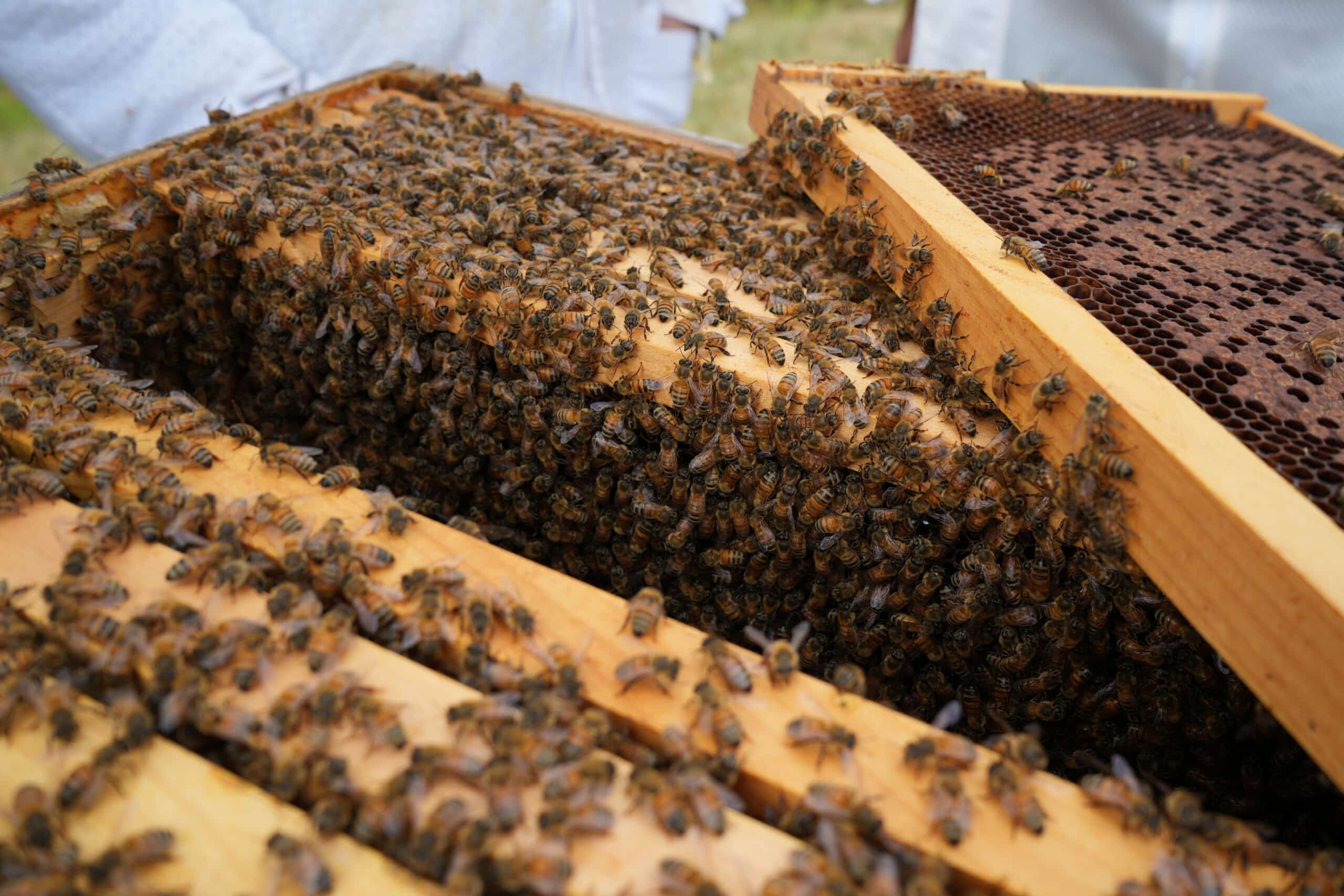
A nucleus colony, or nuc, is a small but already functioning colony. A proper nuc should contain a combination of five deep frames with drawn comb, a laying queen who has been accepted by the colony, brood in all stages (eggs, larvae, and capped brood), and worker and nurse bees covering the frames. The nuc should have a newly-mated queen whose laying pattern has been monitored for at least three weeks. This is important! Three weeks gives ample time to determine if the queen mated well. Many times, virgins will venture out on their mating flights and will not get mated very well. This will show up as a spotty brood pattern(s), among other issues. The nuc should also include food stores such as honey and pollen. Because a nuc already has established brood and comb, it typically builds up faster than a package. For many beginners, this can provide a smoother and more confidence-building start. Neither option is inherently better, but understanding what you are purchasing — and ensuring the product matches its description — is essential.
Questions to Ask Before You Buy
Asking questions is not confrontational — it is responsible beekeeping. Before purchasing bees, take time to clarify exactly what you are receiving. Confirm that a queen is present and actively laying. Is she marked and with the appropriate year color? Ask whether she is newly mated or overwintered, and how old she is. Clarify how many frames are included and whether those frames are fully covered with bees. It is also important to understand what the price includes — whether you are purchasing just the bees or the box as well — and to inquire about any treatments that have been used and whether there have been recent pest concerns.
Ask about any data the beekeeper has kept. How do these genetics hold up to varroa? Are they gentle? Are they good foragers? Do they plow through their food during winter or are they more conservative? How quickly do they brood up in the spring? Are they swarmy?
If possible, visit your nuc a few days before pickup so you can see the actual colony you will be taking home. If an in-person visit is not feasible, requesting current photos or a short video is completely reasonable. A reputable seller should welcome thoughtful questions and be willing to provide clear answers. Transparency builds trust, and trust is foundational in our beekeeping community.
Red Flags to Watch For
While most beekeepers are honest and hardworking, it is wise to be attentive. Extremely low prices without explanation can sometimes signal corners being cut. Sellers who avoid answering basic questions about queen status, brood pattern, or pest management may not be offering a fully established colony. Frames that contain only foundation and no drawn comb should not be marketed as a functioning nuc. However, it is worth a note that some nuc producers will include a frame of empty foundation to keep the bees busy, especially if the nuc is well populated. Likewise, visible pest signs and pressure that is dismissed as “normal” deserves closer consideration.
There is nothing inherently wrong with selling splits, queenless colonies, or budget starter options. In fact, experienced beekeepers often seek these out. The issue arises when expectations and reality do not match. Clear descriptions and fair pricing protect both the seller and the buyer. When transparency is lacking, new beekeepers can unknowingly start their journey at a disadvantage.
Queenless Colonies and Splits
It is important to understand the difference between a true nuc and a queenless split. A nuc should have a laying queen and brood in all stages. A queenless split, on the other hand, relies on the bees to raise a new queen or the purchaser will need to insert a mature cell, virgin queen or mated queen. While bees are capable of doing this, queen rearing is not guaranteed to succeed. Weather conditions can interfere with mating flights, and several weeks may pass without eggs while the process unfolds. Sometimes a queenless split is useful as a brood boost for a weaker hive.
For experienced beekeepers, managing a queenless colony may be a calculated risk. For beginners, however, it can be confusing and discouraging. Without eggs or brood, a new beekeeper may assume they have done something wrong when the issue actually began before the bees ever arrived. There is nothing wrong with selling splits — as long as they are clearly labeled and priced accordingly. Clarity and honesty prevent heartbreak.
Why Pest Questions Matter
Pests and parasites do not remain isolated to one colony. Small hive beetles, mites, and other issues can spread quickly once introduced into an apiary. A single problem colony has the potential to impact every hive in the yard. New beekeepers, who may not yet recognize early warning signs, are especially vulnerable to inheriting challenges they did not create.
This is why asking about pest history and treatment practices is not accusatory — it is protective. Healthy bees benefit everyone. Thoughtful purchasing decisions help safeguard not only your own colonies, but also the broader beekeeping community. It is good to ask when a mite wash was conducted and what were the numbers. What threshold does the beekeeper use to treat (1%, 2% or 3%?) What were the bees treated with? What was the mite drop after treatment? Does the producer do an oxalic acid treatment in the winter when the colony is broodless?
Buy Local. Buy Reputable. Build Community.
At Oldham County Beekeepers Association, we strongly encourage buying bees locally whenever possible. Bees raised in our region aren’t subjected to the stress of working the almond fields or being shipped. There is evidence that stress from shipping and the transfer of diseases and pests can be not only detrimental to the bees you have bought but also to your existing colonies. Local suppliers are also part of our shared beekeeping network, which means support and mentorship are often just a phone call away.
When you purchase locally, you build relationships. You strengthen responsible breeding and management practices in your area. You create accountability and trust. Most importantly, you increase your chances of success in that critical first season.
Education protects both the bees and the beekeeper. Ask questions. Seek clarity. Lean into community. If a seller is honest and transparent, they will welcome the conversation.
If we can help even one new beekeeper start strong and avoid unnecessary disappointment, then this discussion is worth having. That is what community is for — supporting one another and helping both bees and beekeepers thrive. 🐝